Emergency water extraction
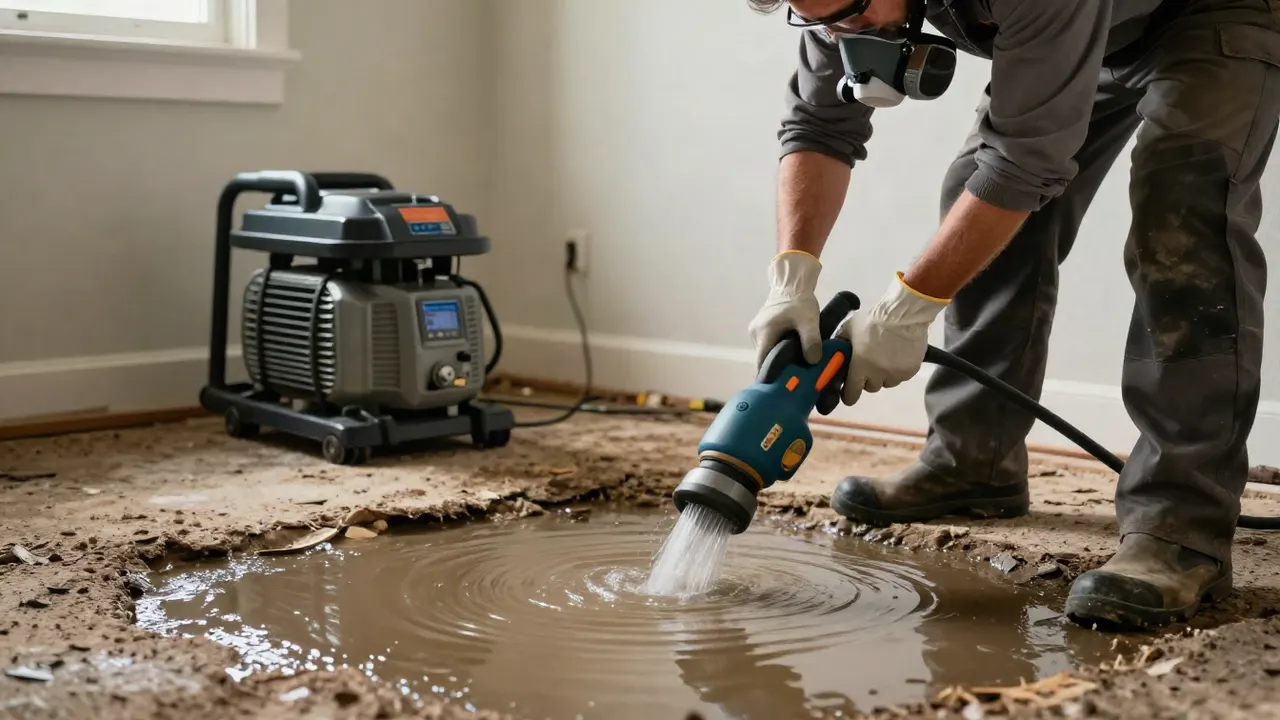
Truck-mounted extractors and submersible pumps pull standing water from carpet, concrete, hardwood, and crawlspaces. We extract first because drying equipment cannot do its job while water is still sitting on the floor.
When a pipe lets go at 2 a.m., every minute soaks deeper into your floors and framing. Our burst pipe water cleanup Annapolis MD crews roll with truck-mounted extractors, thermal imaging cameras, and commercial dehumidifiers to stop the damage and dry your home. We handle emergency burst pipe cleanup Annapolis MD for homeowners across Anne Arundel County, from finished basements in Cape St. Claire to historic crawlspaces downtown. Call 410-709-0950.
Burst pipe water cleanup Annapolis MD is the emergency extraction, structural drying, and sanitizing process that follows a failed supply or drain line. It starts with shutting off the water and killing power to wet circuits, then moves to pumping standing water, mapping hidden moisture with thermal imaging cameras and moisture meters, and drying wall cavities, subfloor, and framing to the ANSI/IICRC S500 standard. We pull baseboards, drill weep holes, and set air movers and dehumidifiers so trapped water does not turn into mold.
Most Annapolis calls come from three failure points: copper pipes that split during a hard freeze, PEX tubing that pops at a bad fitting, and PVC drains that crack under root pressure. Older homes in the Historic District and Murray Hill still run original galvanized or copper lines that fatigue after decades of pressure cycling. If you are searching for burst pipe water cleanup near me Annapolis MD at 3 a.m., we answer the phone and dispatch a crew.
Every burst pipe job is different, but these are the core pieces we handle on a standard residential loss in Annapolis. If your situation needs something beyond this list, we tell you upfront and price it before we start.
Truck-mounted extractors and submersible pumps pull standing water from carpet, concrete, hardwood, and crawlspaces. We extract first because drying equipment cannot do its job while water is still sitting on the floor.
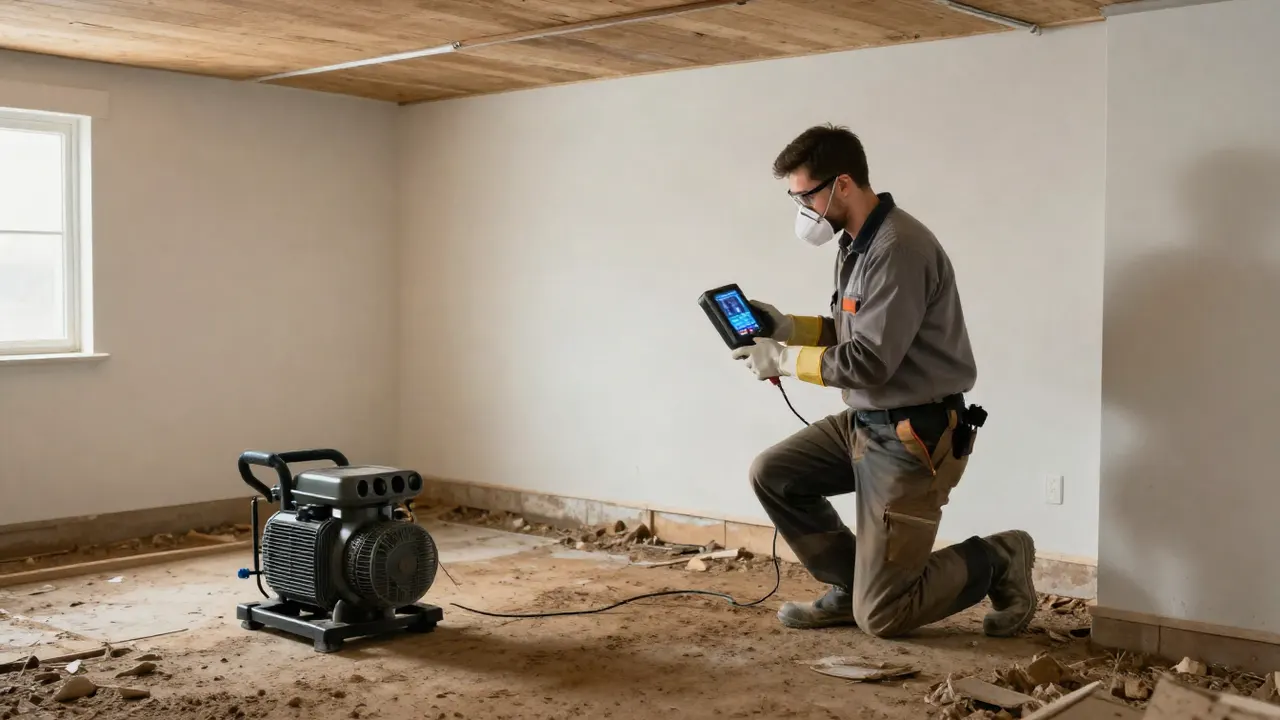
Thermal imaging cameras and pin-type moisture meters map how far water traveled behind walls and under floors. Every reading is logged and photographed, which becomes the backbone of your insurance claim.
Air movers and dehumidifiers run 24/7 until the structure hits dry standard per ANSI/IICRC S500. We check readings daily and adjust equipment placement as the job progresses, so drying stays on schedule.
Saturated baseboards, drywall, and pad come out so air can reach the framing. We cut clean lines and remove only what is wet, which keeps repair costs down and makes the rebuild simpler for whoever does it.
After drying, affected surfaces get treated with EPA-registered antimicrobial products. This is standard practice on any water loss that sat more than a day or involved a drain line, and it is what keeps mold from coming back.
You get a written report with final moisture readings, photos, and equipment logs. It is what your adjuster needs to close the claim, and it is what we use to confirm the structure is genuinely dry before we pull equipment.
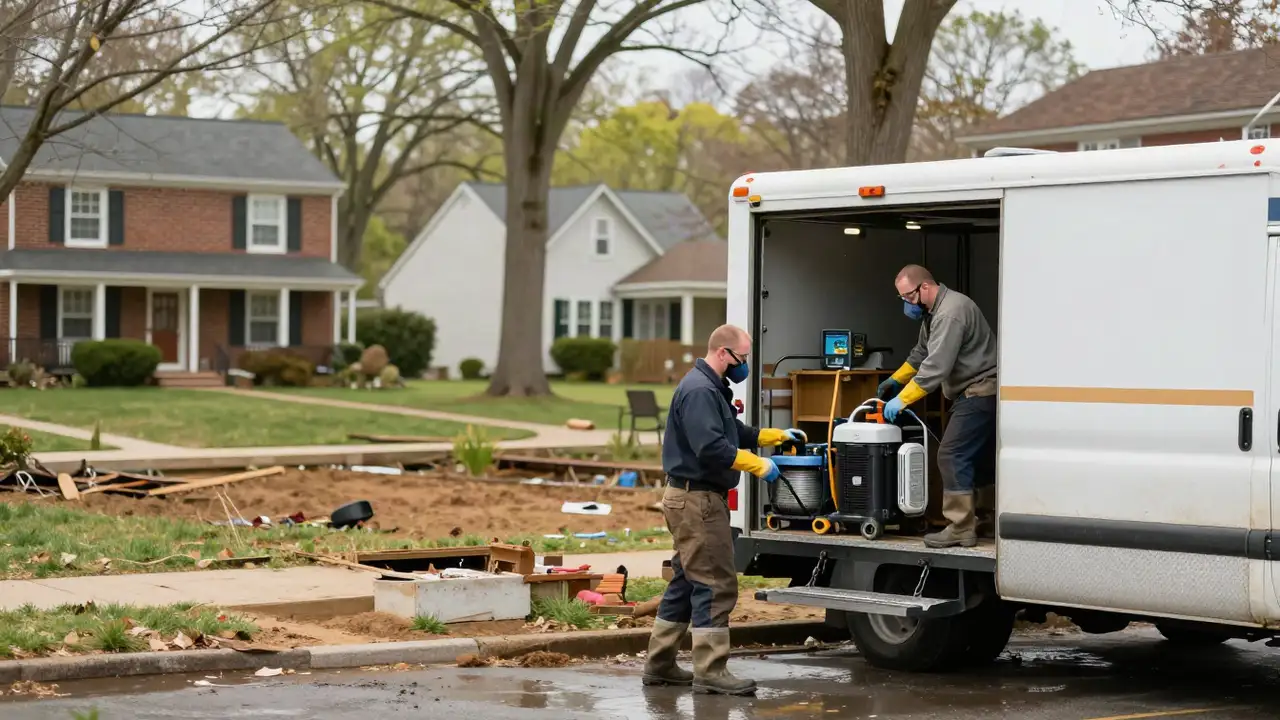
You call 410-709-0950 and reach a live person, not a voicemail. We ask where the water is coming from, whether the main is shut off, and whether anyone is in the house. A crew is dispatched with extraction equipment already loaded, typically arriving within 60 to 90 minutes anywhere in the Annapolis area.
If the main is still open, we close it. We kill power to any wet circuits at the breaker and check for sagging ceilings or standing water near outlets. This step takes 10 to 15 minutes and prevents the electrical hazards that cause most secondary injuries after a burst pipe.
Truck-mounted water extractors pull standing water from carpet, concrete, and hardwood, while submersible pumps handle deeper basement flooding. We then walk the whole affected area with moisture meters and a thermal imaging camera to map exactly how far the water traveled. This is where we find the surprises.
We place air movers and dehumidifiers based on the moisture map, not guesswork. Baseboards come off where needed, weep holes get drilled into wall cavities, and we set a drying goal tied to the ANSI/IICRC S500 standard. Equipment runs 24/7 and we monitor readings daily until the structure hits dry standard.
We take final moisture readings, photograph the dry structure, and confirm the pipe repair is complete before we pull equipment. You get a written drying report and photos for your insurance file. If any drywall or flooring needs replacement, we scope that work and schedule it before we leave.
You call 410-709-0950 and reach a live person, not a voicemail. We ask where the water is coming from, whether the main is shut off, and whether anyone is in the house. A crew is dispatched with extraction equipment already loaded, typically arriving within 60 to 90 minutes anywhere in the Annapolis area.
Pull large volumes of standing water from carpet and hard surfaces faster than portable units, which shortens the drying window.
Move deep standing water out of basements and crawlspaces before extraction equipment can reach the surface.
Find water hidden behind walls, under floors, and in ceiling cavities that a hand test would miss entirely.
Take pin-type and pinless readings to confirm when the structure has reached dry standard and equipment can come out.
Dri-Eaz and Phoenix Restoration Equipment units run 24/7 to pull moisture out of framing, drywall, and subfloor.
Shop-Vac and RIDGID units handle small pockets of water in tight spaces where larger equipment will not fit.
A copper supply line in an exterior wall split during a January freeze. Water ran behind the kitchen wall for hours before the homeowner noticed a bulge in the drywall. About 40 square feet of drywall was saturated, and the subfloor under the sink was wet.
After: We extracted the water, cut out the wet drywall, dried the wall cavity and subfloor with air movers and a dehumidifier, and treated the area with antimicrobial products. Final moisture readings hit dry standard in four days. The wall was rebuilt and painted.
Book this service →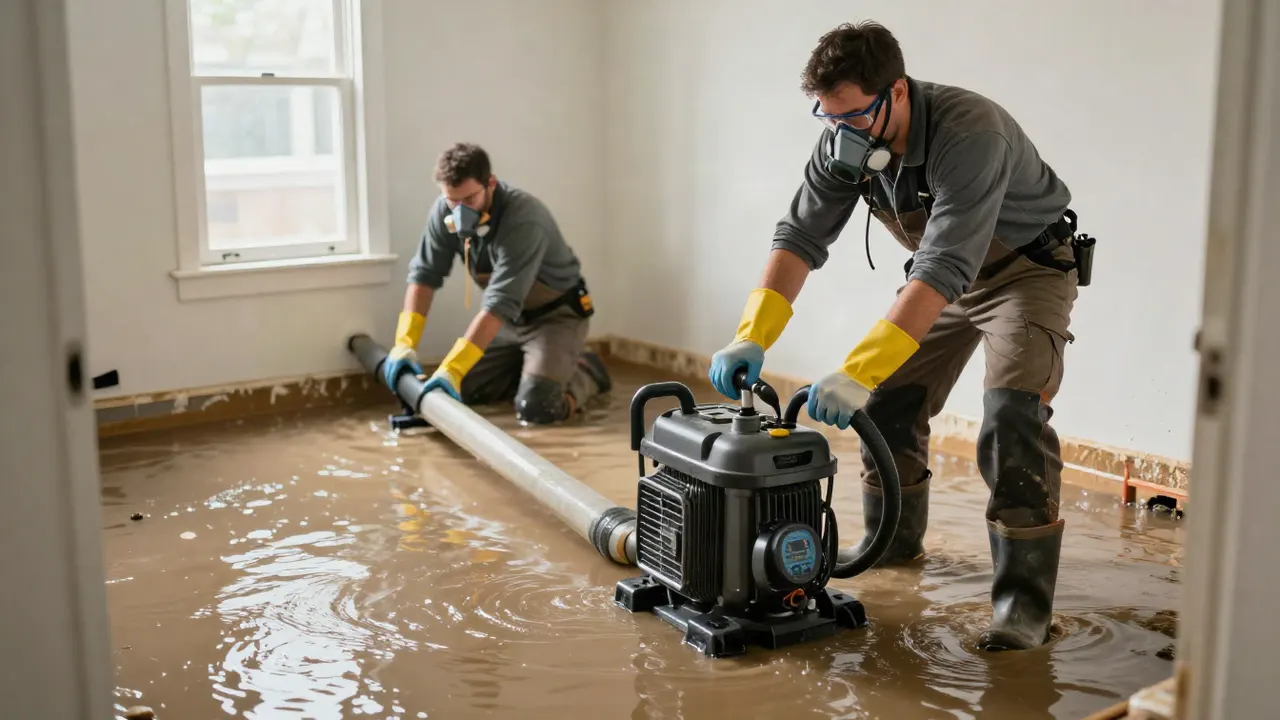
A PEX fitting let go overnight and flooded about 600 square feet of finished basement. Carpet and pad were saturated, baseboards were wet, and standing water was about two inches deep in the low corner near the sump pit.
After: We pumped the standing water, extracted from carpet and pad, removed wet baseboards, and set drying equipment across the whole space. The slab and framing hit dry standard in four days. Carpet was replaced, baseboards were reinstalled, and the room was back in use within a week.
Book this service →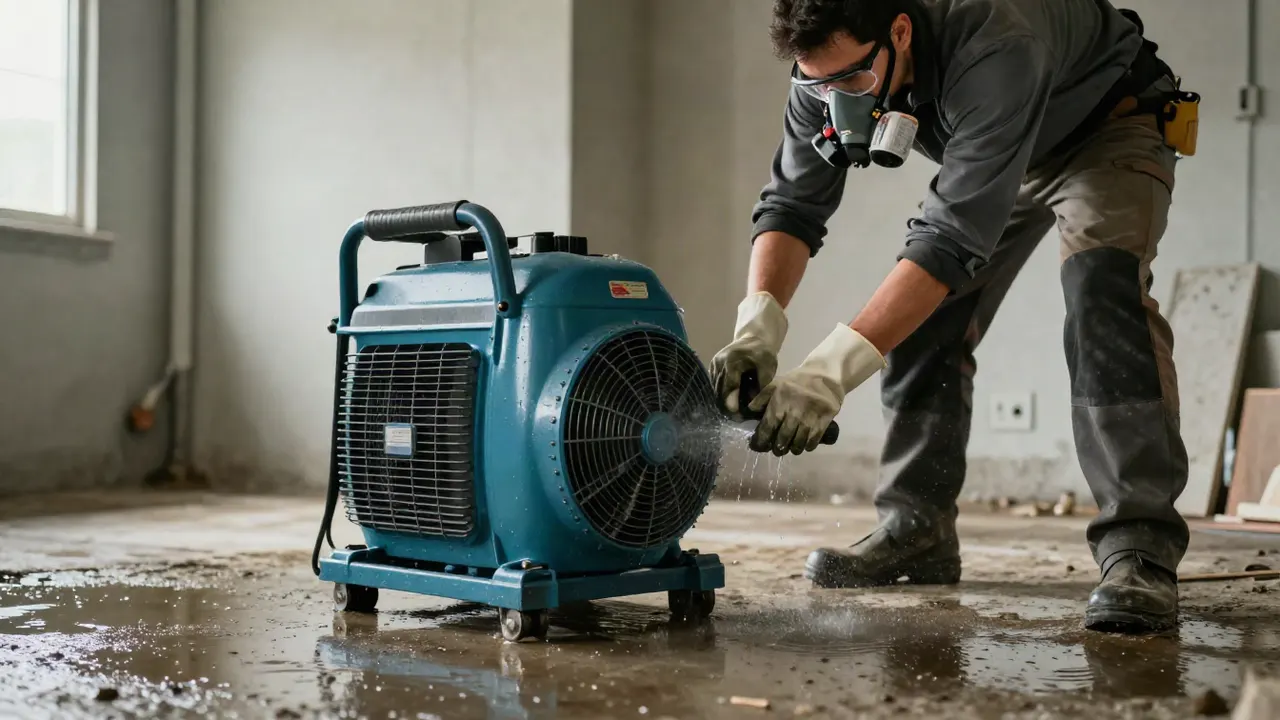
A washing machine supply hose failed while the family was at work. Water sat for about six hours, soaking the laundry room floor, the adjacent hallway carpet, and the bottom of the drywall in two rooms.
After: We extracted the water, pulled the wet pad, dried the subfloor and drywall, and treated the affected area with antimicrobial products. Final readings confirmed dry standard in three days. No mold growth, and only the pad needed replacement.
Book this service →A burst pipe creates a chain of problems that get worse the longer they sit. These are the ones we see most often in Annapolis homes.
Ask a pro →We shut off the water, extract fast, and dry the wall cavities with air movers and dehumidifiers. Thermal cameras confirm the hidden wet spots are dry before we close anything up. Most frozen burst pipe basement cleanup Annapolis MD jobs dry in three to five days.
We pump out standing water with submersible pumps, extract from carpet and concrete, and set drying equipment. We also check the sump pump check valve and recommend a backup sump pump so the next storm does not repeat the loss.
Thermal imaging cameras and moisture meters find the wet zone without tearing out the whole wall. We dry the cavity, treat with antimicrobial products, and repair only the damaged section. That keeps the repair small and the air quality safe.
We photograph every step, log moisture readings, and build the scope in Xactimate, which is the same estimating platform most adjusters use. That documentation is why our customers' claims move through the process with fewer disputes.
$1,200 - $4,500 depending on scope
Typical 2026 pricing for burst pipe water cleanup in Annapolis runs $1,200 to $4,500 for most residential jobs. The low end covers a single-room loss with fast shutoff and minimal material removal. The high end covers a finished basement flood with wet drywall, carpet, and pad across multiple rooms. We give you an upfront number before we start, and when the loss is covered by insurance, we bill the carrier directly so you are not fronting the full cost.
The cost of drying a home correctly is almost always less than the cost of replacing mold-damaged framing, flooring, and drywall six months later. Fast, documented drying protects both your home and your insurance claim.
A few gallons in one room is a different job than two inches of standing water across a finished basement. More water means more extraction time and more equipment on site.
Get a quote ↗Water that sat overnight has traveled further into walls and framing. Longer saturation means more demolition, longer drying, and a higher risk of microbial growth.
Get a quote ↗Carpet and pad usually come out. Hardwood and tile often can be saved. The mix of materials in the affected area drives both labor and replacement cost.
Get a quote ↗Water follows the path of least resistance, so a single burst pipe can affect three or four rooms. Each additional room adds extraction, drying equipment, and monitoring time.
Get a quote ↗“A copper line in our crawlspace split during a cold snap in January and we woke up to water in the hallway. They were at the house in about an hour, pulled the water, and had drying equipment running before lunch. Daily readings, photos for the insurance claim, and the floors dried without having to be replaced. Worth every penny.”
Karen M.Homeowner, Eastport
✓ Verified“Our finished basement flooded when a PEX fitting let go overnight. They extracted about two inches of water, cut out the wet drywall, and dried the whole space in four days. The Xactimate report they built matched what our adjuster approved, so we did not have to fight the claim. Straight answers the whole way.”
Dave R.Homeowner, Cape St. Claire
✓ Verified“Old house, original pipes, and a burst line behind the kitchen wall. They used a thermal camera to find the wet spots we could not see and dried the wall cavity instead of tearing out the whole thing. Saved us thousands. The crew was respectful, on time, and cleaned up after themselves.”
Priya S.Homeowner, Murray Hill
✓ VerifiedMost residential jobs in Annapolis run $1,200 to $4,500 in 2026, depending on how much water escaped and how far it traveled. A single-room supply line loss with fast shutoff often lands near the low end. A finished basement flood with wet drywall and carpet pushes toward the high end. We give you an upfront number before we start, and we bill your carrier directly when the loss is covered.
Shut off the main water valve first, then kill power to any wet circuits at the breaker. Both take under a minute and prevent the two biggest causes of secondary damage. After that, call us at 410-709-0950. Do not run a shop vac on a wet circuit, and do not try to lift carpet yourself, because that spreads water into dry areas and makes the drying job bigger.
Yes, most standard homeowner policies in Maryland cover sudden and accidental burst pipe losses, including extraction, drying, and repairs. What they typically do not cover is long-term seepage or mold that was already there. We document the loss with photos and moisture readings, build the scope in Xactimate, and work directly with your adjuster so the covered portion gets handled cleanly.
Extraction usually takes two to four hours. Structural drying runs three to five days for most Annapolis homes, with daily monitoring to confirm progress. If drywall or flooring has to be replaced, add another two to five days depending on material availability and scope. We give you a realistic timeline on day one and update it as readings come in.
We answer 24/7 and dispatch crews across Anne Arundel County with extraction and drying equipment already loaded. Call 410-709-0950 and we will tell you exactly what to do while we are on the way. MHIC licensed, IICRC certified, and insured.
Call 410-709-0950 4107090950 →Basements do not flood on a schedule. When yours does, call 410-709-0950. We answer 24/7 and dispatch a crew within the hour. You can also email us at info@annapolisfloodedbasementcleanup.com. We serve all of Annapolis and Anne Arundel County.